All content on this site is intended for healthcare professionals only. By acknowledging this message and accessing the information on this website you are confirming that you are a healthcare professional. If you are a patient or carer, please visit the MPN Advocates Network.
The MPN Hub website uses a third-party service provided by Google that dynamically translates web content. Translations are machine generated, so may not be an exact or complete translation, and the MPN Hub cannot guarantee the accuracy of translated content. The MPN Hub and its employees will not be liable for any direct, indirect, or consequential damages (even if foreseeable) resulting from use of the Google Translate feature. For further support with Google Translate, visit Google Translate Help.


The MPN Hub is an independent medical education platform, sponsored by GSK, Novartis, Sobi and Takeda and supported through independent educational grants from Bristol Myers Squibb, Blueprint Medicines, Incyte and Merck Sharp & Dohme LLC, Rahway, NJ, USA. Funders are allowed no direct influence on our content. The levels of sponsorship listed are reflective of the amount of funding given. View funders.
Now you can support HCPs in making informed decisions for their patients
Your contribution helps us continuously deliver expertly curated content to HCPs worldwide. You will also have the opportunity to make a content suggestion for consideration and receive updates on the impact contributions are making to our content.
Find out more
Create an account to access:
Bookmark & personalize site content
Receive alerts for new content in your areas of interest
View MPN content recommended for you
NCCN guidance on ropeginterferon alfa-2b in MPN
Do you know... Which of the following best reflects the current NCCN position of ropeginterferon alfa‑2b in polycythemia vera?
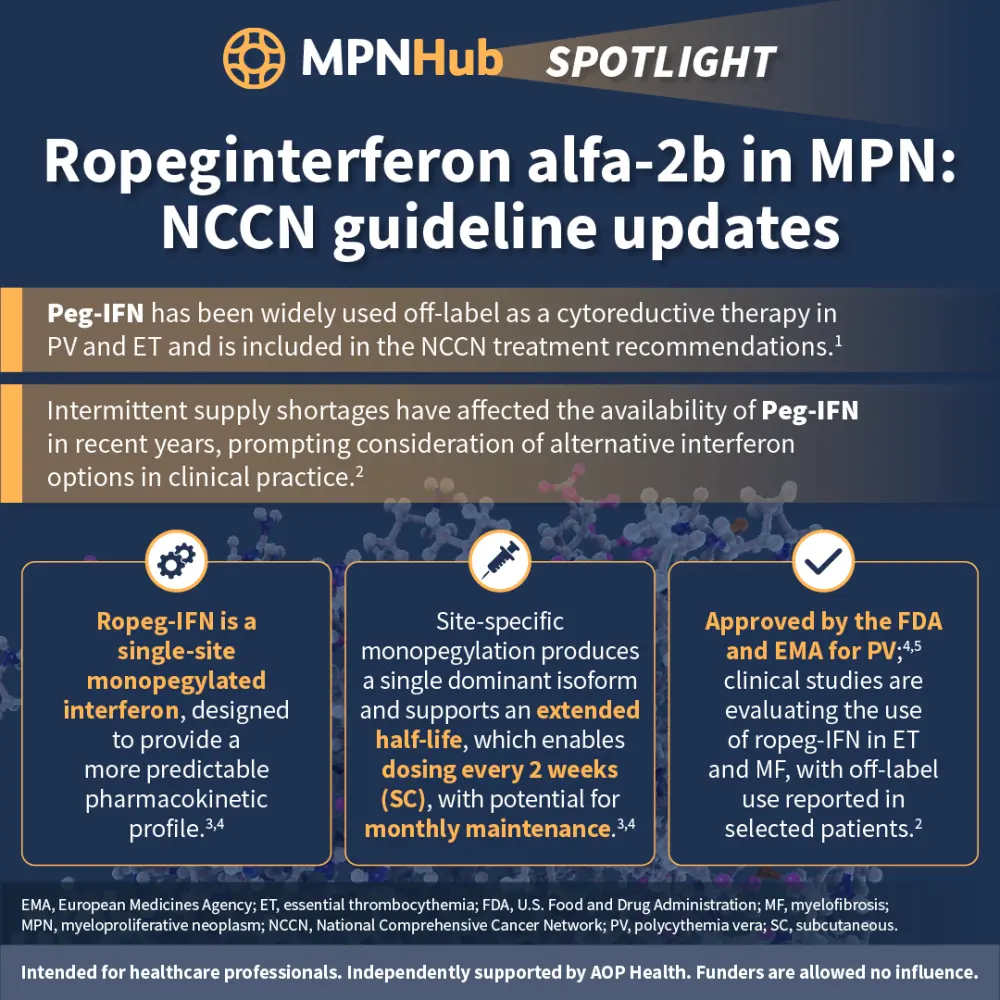
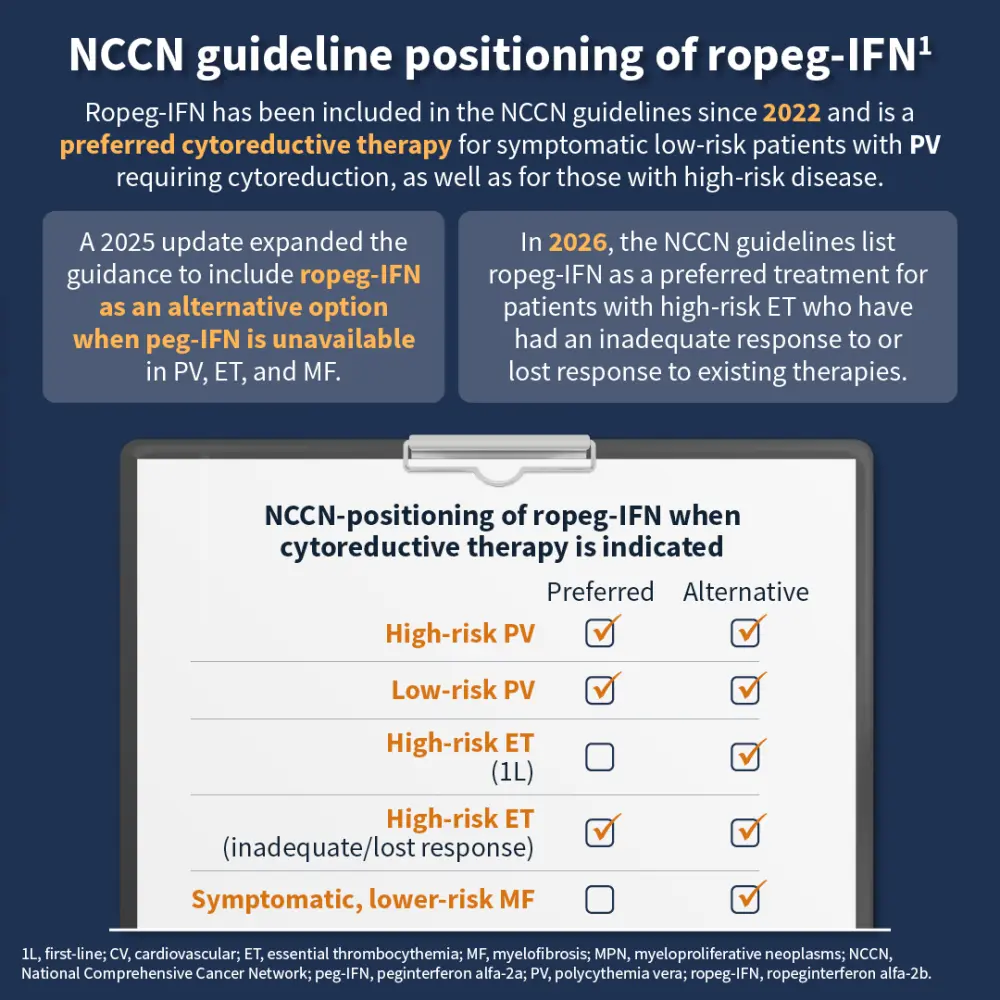
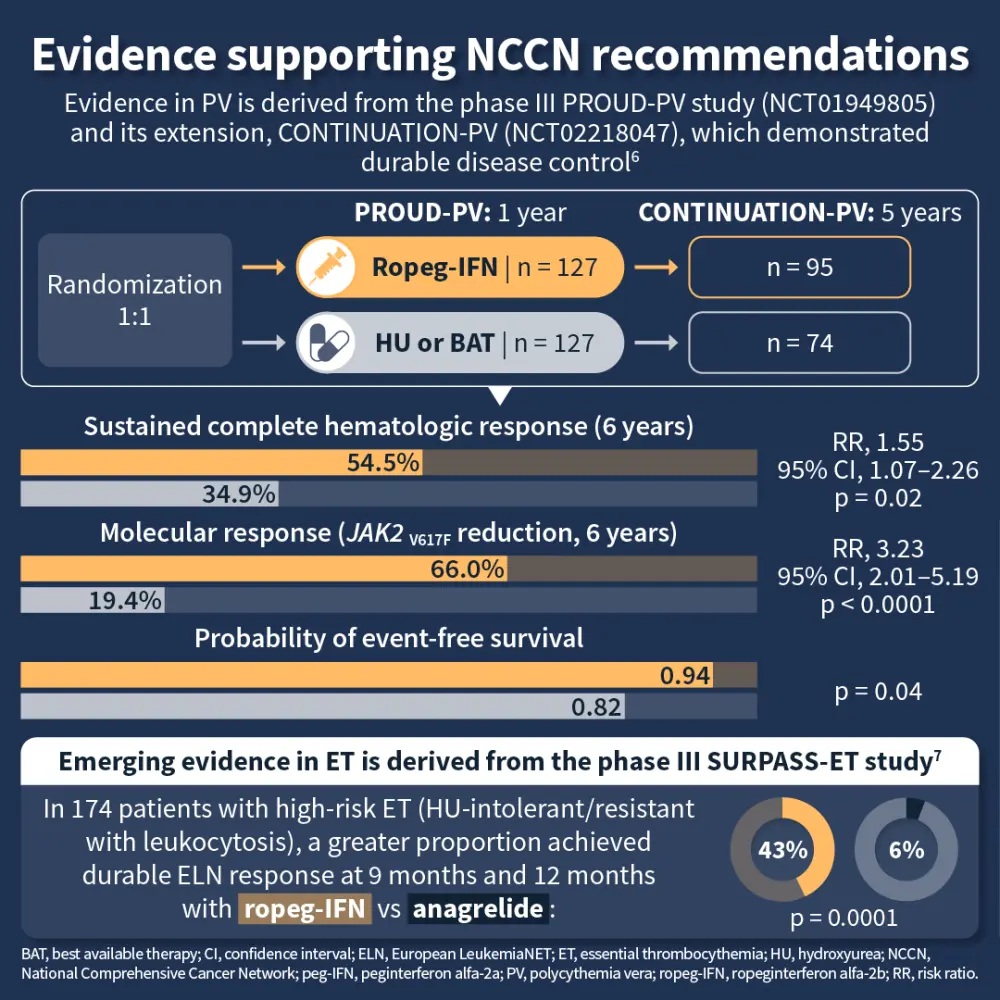
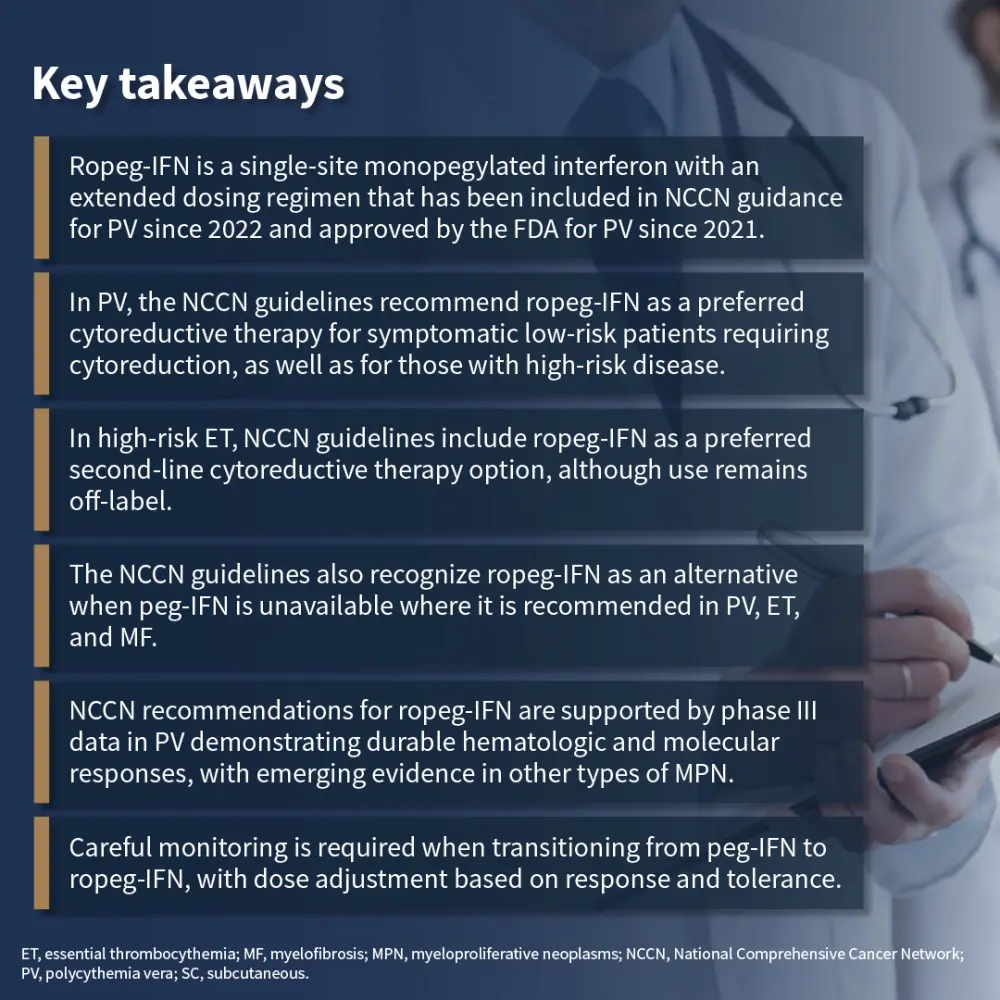
Ongoing supply challenges with peginterferon alfa‑2a have highlighted the practical importance of alternative interferon options within the National Comprehensive Cancer Network (NCCN) guidelines for myeloproliferative neoplasms (MPN).1 Ropeginterferon alfa‑2b is a long‑acting, monopegylated interferon with a prolonged half-life, enabling administration every 2 weeks with the potential for monthly maintenance.2,3 It has been included in the NCCN guidelines for polycythemia vera (PV) since 2022, where it is listed as a preferred cytoreductive therapy option for symptomatic low-risk patients requiring treatment and for those with high-risk disease. This positioning is supported by phase III data from the PROUD‑PV study and its extension, CONTINUATION‑PV, which demonstrated sustained hematologic and molecular responses, alongside improved event-free survival, over long-term follow-up.4
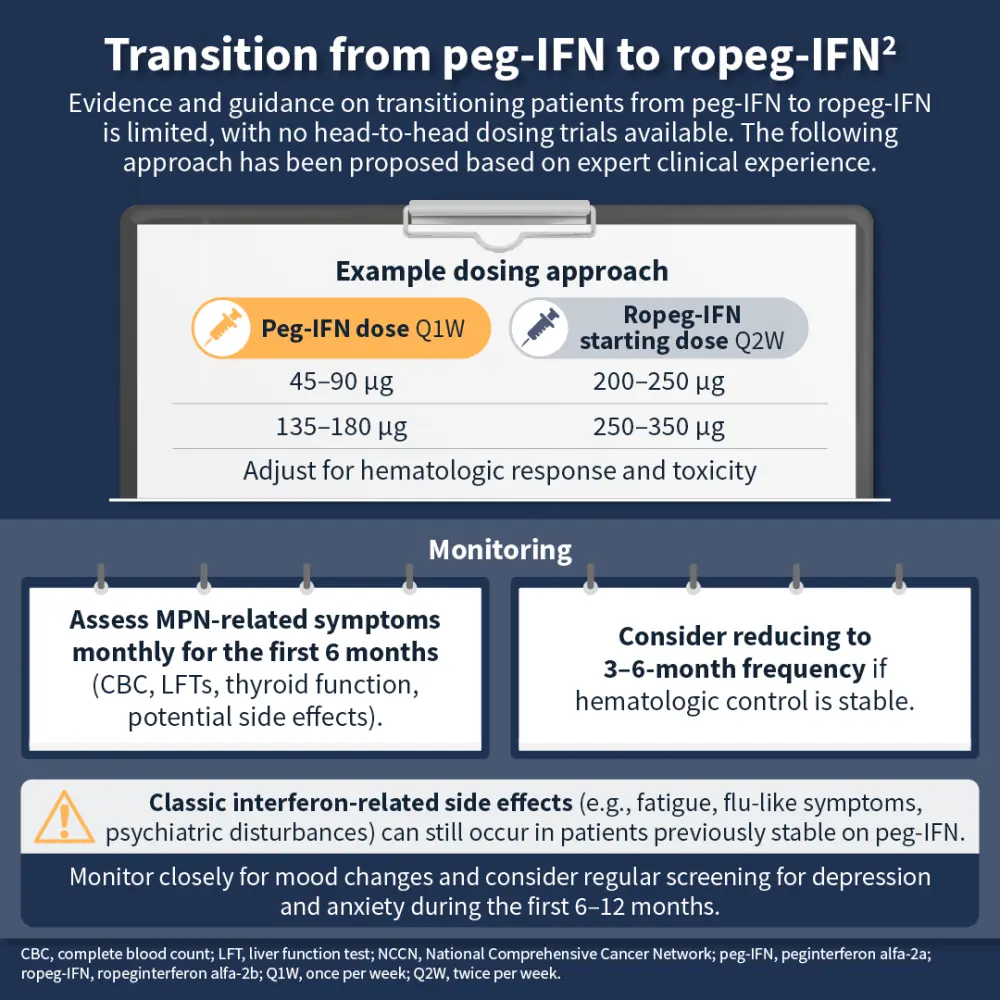
The latest NCCN guidance also recognizes ropeginterferon alfa‑2b as an appropriate alternative in PV, myelofibrosis, and essential thrombocythemia when peginterferon alfa‑2a is unavailable.1 Strategies for transitioning between the two interferons are largely based on clinical experience, with careful monitoring of response and tolerability advised.5
This educational resource is independently supported by AOP Health. All content is developed by SES in collaboration with an expert steering committee. Funders are allowed no influence on the content.
References
Please indicate your level of agreement with the following statements:
The content was clear and easy to understand
The content addressed the learning objectives
The content was relevant to my practice
I will change my clinical practice as a result of this content
This content is accurate as of the date of publication and is not updated retrospectively. Please refer to the latest available evidence, guidelines, and relevant regulatory information when making clinical decisions.
Your opinion matters
Among patients with myelofibrosis and isolated anemia at presentation, with no indication for treatment with a JAK inhibitor, how often do you use anemia-directed treatments (EMAs, ESAs, danazol, etc.) as monotherapy?